Glasgow Science Festival 2026
We had an amazing day at the Glasgow Science Festival on Saturday June 13, with our tabletop activity “What helps young people to take care of their health? An interactive gallery.” attracting a wide range of young people of all ages and their parents/grandparents.
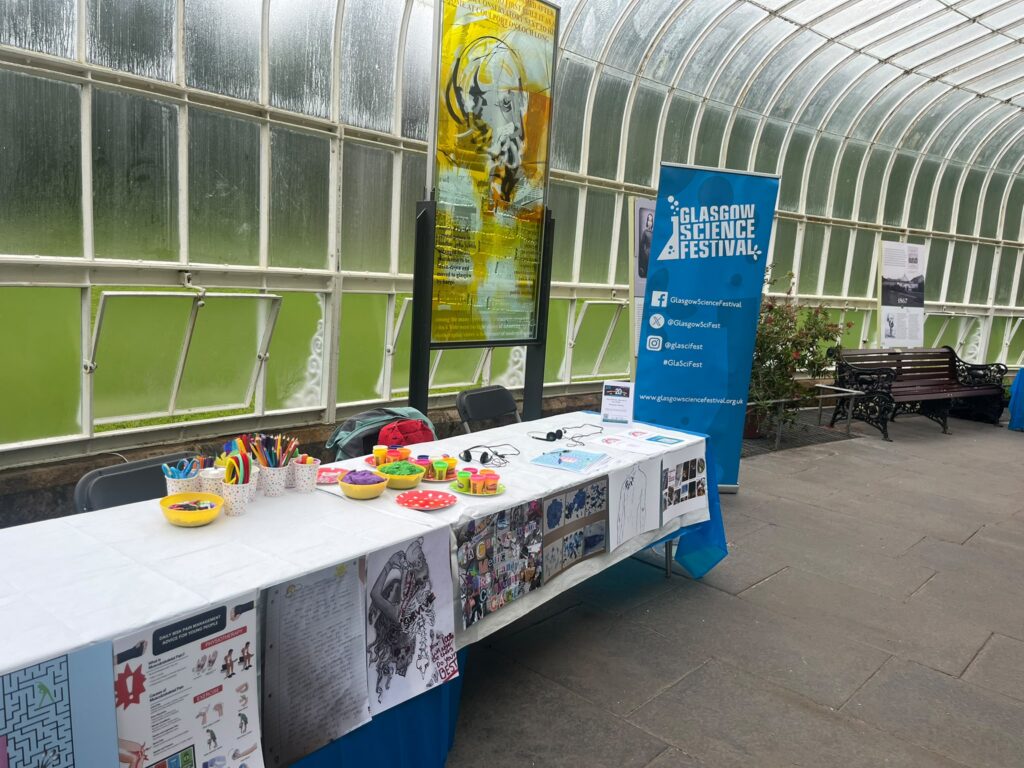
Our activity showcased the creative work our young people participants have made to express their experiences with management of chronic pain. Attendees were truly impressed by the artwork created by our interview participants and there was no clear favourite, as everyone liked a different piece the best.
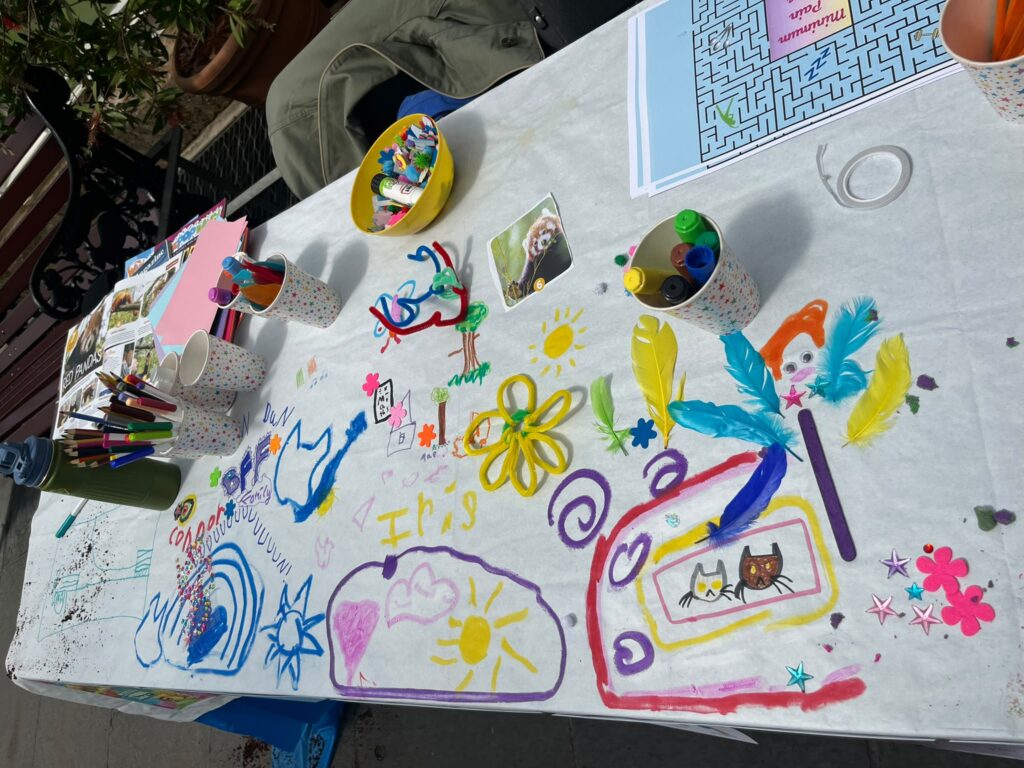
Attendees also got involved themselves, by contributing to our collaborative tablecloth on “what helps you when you don’t feel well” or trying to complete the pain-maze. Many turned to their phone or pets for help, support, or distractions. Others preferred to be left alone, draw or be in nature. This left us with a lovely community-artwork at the end of the day.
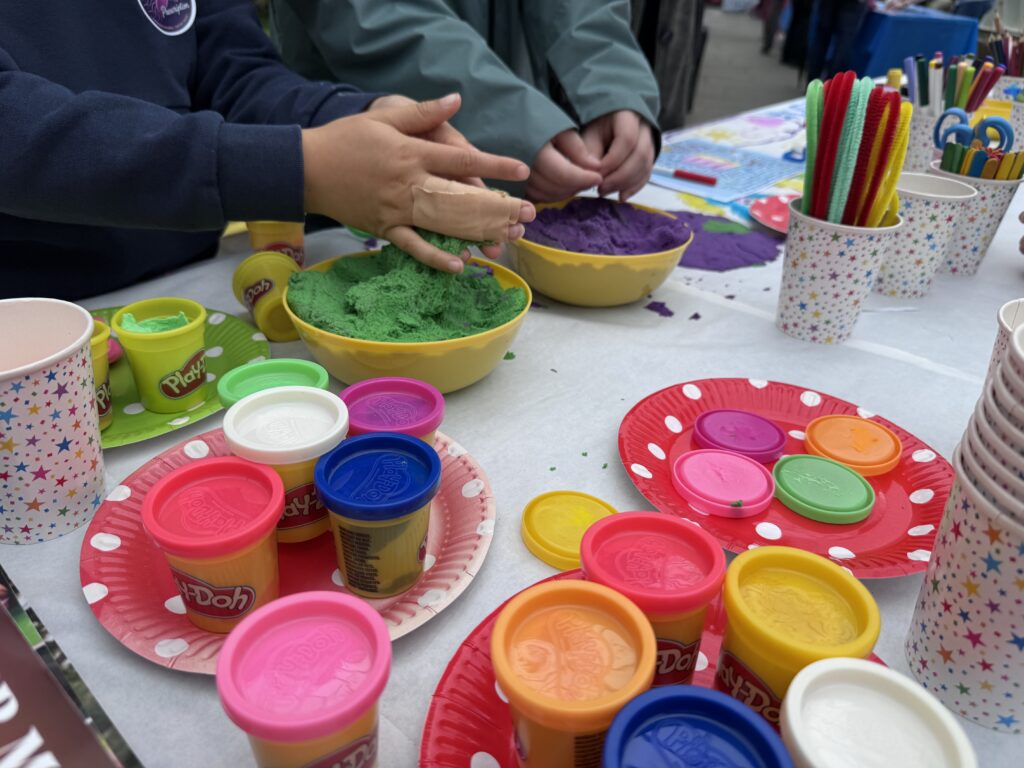
Amongst the interactive activities, the pain-maze and kinetic sand were definitely the clear favourite of the day, with some children even making a new creation: playdoh-kinetic sand!
As the pain-maze was not solvable, it gave us a great opportunity to explain that sometimes no matter what you try to do to deal with the pain, it might not help to get you to feel better. Rudie, our young person partner, was the expert in explaining the spoons in the maze, linked to the spoon theory . Beyond his expert explanation of the spoon theory, it was lovely to have Rudie along as many parents were keen to find out more about his experience of living with pain for the past 9 years.
We feel we have truly been able to show children of all ages and their caregivers that pain is a common experience where psychological approaches can play an important role in its management. “Our mind has a lot of power I wasn’t aware off” is how one grandpa described his reflections on our activity, after being astonished at the start that psychologists would research pain experiences.